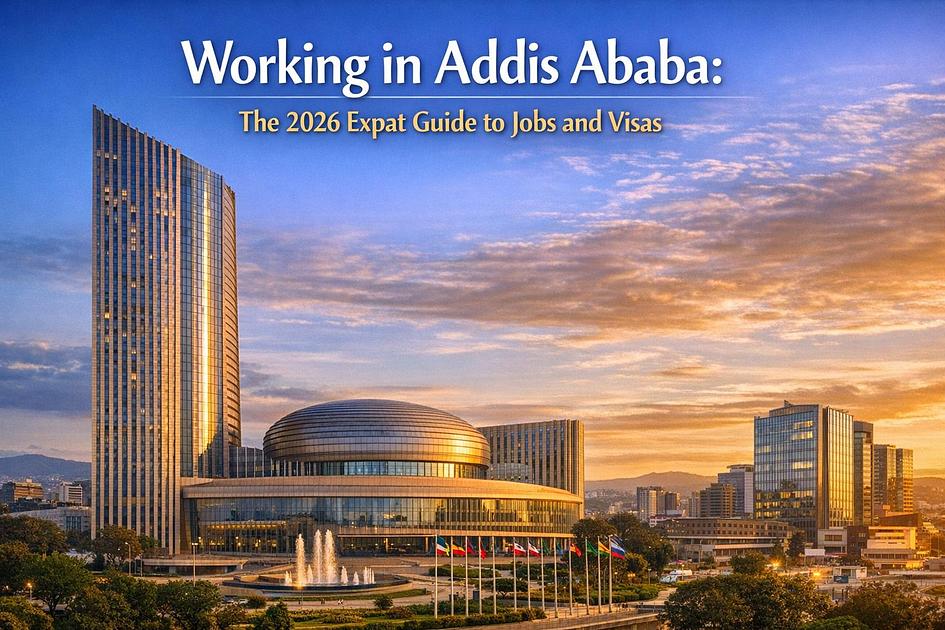
Working in Addis Ababa: The 2026 Expat Guide to Jobs and Visas
Introduction
Known as the "Political Capital of Africa," Addis Ababa is a bustling, rapidly modernizing metropolis that hosts the African Union (AU), the United Nations Economic Commission for Africa (UNECA), and over 100 foreign embassies. For expatriates, 2026 presents a unique landscape. The city offers incredible professional opportunities in international development, education, and foreign investment, combined with a rich cultural lifestyle. Here is your complete guide to finding work and settling into Addis Ababa as an expat.
1. Top Job Sectors for Expats
While the Ethiopian government prioritizes local hiring, there is a consistent demand for foreign expertise in specific niches:
- The Diplomatic & NGO Sector: This is the largest employer of expats. Roles range from policy advisors at the AU to program directors for international NGOs like USAID, World Vision, and Oxfam.
- International Education: Premium international schools (such as the International Community School (ICS) and Bingham Academy) continuously recruit certified foreign teachers and administrators.
- Multinational Corporations (MNCs): With the liberalization of the telecom and financial sectors, foreign experts are frequently brought in by companies like Safaricom Ethiopia and international tech vendors.
- Construction & Engineering: Project directors and specialized engineers are often hired by foreign contractors managing mega-projects across the country.
2. Navigating the 2026 Work Permit Process
Working legally in Ethiopia requires patience and strict adherence to government regulations. You cannot legally work on a standard tourist or conference visa.
- The Sponsorship Requirement: You must have a confirmed job offer before arriving. Your employer is responsible for initiating your work permit application through the Ministry of Labor and Skills (MoLS).
- The "Knowledge Transfer" Rule: Ethiopian labor law requires employers to prove that the expat is filling a skill gap that cannot be met by a local professional. Employers are often required to assign a local "understudy" to the expat.
- Residence ID: Once your work permit is approved and you arrive in the country, you must apply for a Residence ID card within 30 days, usually processed by the Main Department for Immigration and Nationality Affairs (INVEA).
3. Salaries and Taxes
Expat compensation packages in Ethiopia vary wildly depending on the employer:
- UN/Diplomatic Staff: Enjoy tax-exempt salaries paid in USD, often supplemented by generous housing and hardship allowances.
- NGO & Corporate Staff: Salaries may be paid partially in foreign currency (offshore) and partially in Ethiopian Birr (ETB) for local living expenses. Ensure you understand the current exchange rate dynamics and National Bank of Ethiopia (NBE) regulations regarding currency conversion.
- Income Tax: If you are not holding diplomatic status, you are subject to Ethiopian income tax, which is progressive and caps at 35% for high earners.
4. Cost of Living and Housing
Addis Ababa can be surprisingly expensive for expats who want to maintain a Western lifestyle, primarily due to housing costs.
- Where to Live: The most popular expat neighborhoods are Bole, Old Airport, and Kazanchis. These areas offer proximity to international offices, high-end supermarkets, and security.
- Rent: A modern, furnished two-bedroom apartment in Bole can range from $1,000 to $2,500+ USD per month. Rents for expat housing are frequently quoted and negotiated in dollars.
- Daily Expenses: Local produce, coffee, and domestic services are incredibly affordable. However, imported goods (from electronics to foreign groceries) are heavily taxed and expensive.
5. Getting Around the City
- Ride-Hailing Apps: Apps like Ride and Feres are the safest and most reliable way to navigate the city. They work exactly like Uber and are very affordable.
- Driving: Expats can convert their home country driver’s license to an Ethiopian one, but navigating Addis Ababa traffic requires strong defensive driving skills.
Conclusion
Moving to Addis Ababa as an expat is an adventure that requires careful administrative planning. By securing a role within the established diplomatic or international corporate frameworks, you can ensure a smooth transition and enjoy one of Africa's most historically rich and welcoming cities.
Are you an employer looking to hire foreign talent? Or an expat seeking a new role? Explore the latest international and executive vacancies on etcareers.com today.